
Wild Tokyo payment methods, currencies and transaction trade-offs
 Available in AU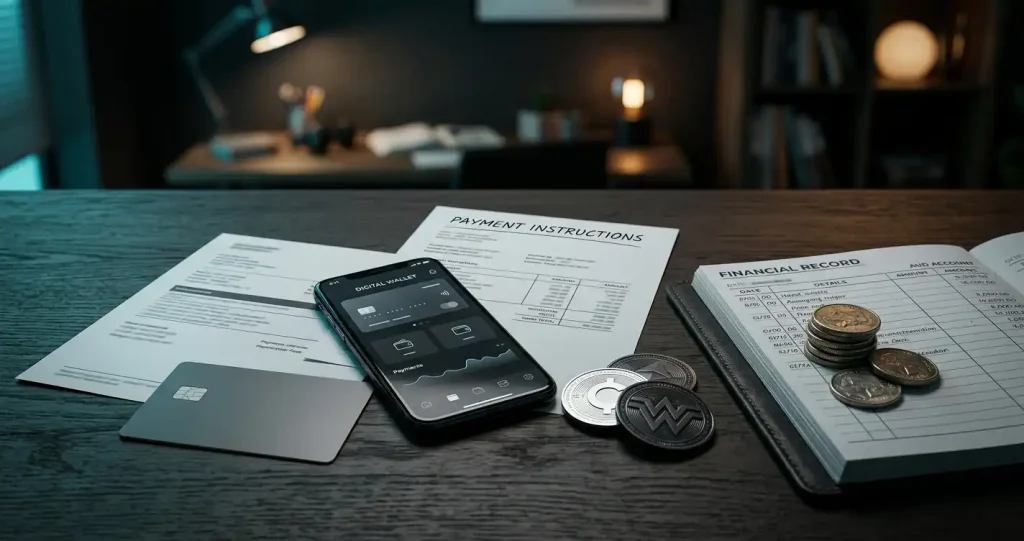
Wild Tokyo uses a hybrid cashier: conventional card, bank, e-wallet and prepaid routes sit alongside a broad cryptocurrency list. AUD is one of the supported account currencies, so Australian-dollar accounting can sit inside the same cashier as EUR, USD, CAD and several European currencies. The useful comparison is not simply “fiat versus crypto”; it is how each route changes conversion exposure, reversibility, provider fees and the path from account balance to cash-out.
Table of Contents
AUD sits within a multi-currency cashier
AUD is supported alongside EUR, USD, CAD, CHF, DKK, HUF, NOK, NZD and PLN. That matters because the account currency is the reference point for deposits, balance display and withdrawals. Using AUD can reduce one layer of conversion for an Australian-dollar budget, while choosing another currency can introduce a separate exchange-rate decision before the payment method itself is considered.
The cashier’s breadth also means payment choice and account currency should be treated as two different settings. A Visa transaction can still involve conversion if the card account and casino balance use different currencies. A crypto transfer can carry a different type of exposure because the asset value can move between the point where funds are acquired, transferred and later converted back.
For practical budgeting, it helps to compare routes in the same unit. An A$100 card transaction and the crypto equivalent of A$100 may begin with the same intended spend, yet the final value can diverge through card-provider conversion, wallet charges, blockchain transfer costs or crypto price movement. Those costs do not all belong to the casino itself.
Account currency also helps make comparisons consistent over time. If a player funds through a card one month and a digital asset the next, translating both routes back to AUD separates the gambling spend from the mechanics of moving money. The deposit amount, any outside conversion cost and the value that eventually reaches the account are three different figures. Keeping them separate makes it easier to see whether a difference came from the chosen payment rail or from the amount set aside for play.
The main Wild Tokyo overview includes a crypto value check for comparing an AUD starting amount with a hypothetical price move and transfer cost. It is a scenario calculator, not a live exchange-rate service.
Payment costs can arise at several layers
A payment route can create costs outside the casino transaction itself. A card issuer can apply foreign-currency charges, an e-wallet can have its own pricing, a bank can price transfers, and a blockchain transaction can require a network fee. Those costs belong to different parts of the route and can change the final AUD value that reaches the account or returns to the player.
This distinction is especially important with cryptocurrency. Blockchain fees can change independently of the casino, while the market value of a digital asset can move between acquisition, transfer and later conversion. A transfer can therefore finish successfully while the AUD value received differs from the amount originally set aside.
- Card and bank layer: issuer, transfer and foreign-exchange rules can affect the total cost.
- Wallet layer: e-wallet pricing and conversion terms can apply separately from the casino account.
- Blockchain layer: network fees and irreversible transfers add a different type of transaction risk.
- Market-value layer: crypto assets can gain or lose AUD value while funds are held or moved.
The practical comparison is the whole route from the funding source to the casino balance and back again. A payment method that looks simple at the cashier can still involve costs or conversion elsewhere in the chain.
Payment routes cover cards, wallets, bank and crypto
The fiat side includes Visa, Mastercard, bank transfer, Skrill, Neteller and MiFinity, plus prepaid routes such as CASHlib and Paysafecard. These methods place different intermediaries between the player’s funding source and the casino balance, so bank, card, wallet or prepaid-provider rules can matter alongside Wild Tokyo’s own account requirements.
| Route | Examples | What changes for the player |
|---|---|---|
| Cards | Visa, Mastercard | Uses familiar card rails; issuer and currency-conversion rules can still apply. |
| Bank | Bank transfer | Moves through banking rails and can follow bank-specific processing and transfer rules. |
| E-wallets | Skrill, Neteller, MiFinity | Adds a wallet account between the bank or card and the casino balance. |
| Prepaid | CASHlib, Paysafecard | Uses prepaid value rather than drawing directly from a primary card balance. |
Wild Tokyo also supports a broad set of digital assets, including BTC, ETH, LTC, USDT, BCH, ADA, SOL, XRP, TRX, TON, USDC and DOGE. The selected asset and the transfer route need to match the details shown for the transaction before funds are sent. A wrong asset, address or network choice can be difficult or impossible to reverse.
Crypto and fiat should therefore be compared by how money moves, not by the number of payment logos. Cards and bank routes keep the transaction inside conventional financial rails. E-wallets add another account layer. Crypto introduces blockchain settlement and, for non-stable assets, price movement between AUD and the digital asset.
Withdrawal mechanics need a separate comparison because cash-out thresholds can differ by method and identity verification can become part of the process. The withdrawal section covers those constraints and the interaction between account checks and payment processing.
Fiat and crypto create different transaction risks
Fiat routes keep the value in national currencies, which makes budgeting easier to read in AUD. Their friction is more likely to come from card rules, bank processing, wallet terms or foreign-exchange conversion. Crypto removes some of those conventional rails but introduces price volatility and transaction irreversibility. A mistaken blockchain address or network choice can be much harder to correct than an ordinary card-entry error.
Stablecoins such as USDT and USDC can reduce some of the price movement associated with assets such as BTC or ETH, but they do not remove blockchain transfer risk. They still rely on a supported network and a correct destination. Likewise, holding a volatile asset only briefly reduces the time exposed to price movement but does not turn the transfer into a fixed-AUD transaction.
A useful way to choose between the two families is to identify which risk is easier to control. Someone who already keeps funds in AUD may value direct fiat accounting and familiar payment-provider records. Someone who already holds crypto may avoid an initial fiat purchase step, but should still account for network costs, irreversible transfers and the AUD value at the point of conversion.
- Match the route to the account currency. Compare AUD funding with any conversion involved in a non-AUD balance.
- Separate casino pricing from provider pricing. Casino-side pricing does not remove bank, wallet, card or blockchain costs elsewhere in the route.
- For crypto, verify asset and transfer route together. The selected coin and the displayed network details need to match before funds are sent.
- Plan cash-out separately. Withdrawal minimums and verification requirements can differ from the deposit path.
The comparison becomes clearer when the route is traced in both directions. On the way in, the key questions are the account currency, any provider-side conversion and whether the transfer can be reversed if the details are wrong. On the way out, the relevant questions shift to the withdrawal method, the method-specific minimum and any account checks that have to be completed before funds move. Treating deposit and withdrawal as one identical journey can hide that asymmetry.
For a mixed fiat-and-crypto cashier, record-keeping is another practical difference. Bank, card and wallet payments normally leave statements in the provider account, while a crypto transfer is identified by wallet and blockchain transaction records. Those records do not change the casino terms, but they can make it easier to reconstruct which route was used, what value was sent and where an outside fee or conversion entered the transaction.
Identity verification remains relevant whichever funding route is used. Wild Tokyo is not a no-KYC model, so choosing crypto does not remove the possibility of document checks around withdrawals. The account section explains how identity checks can affect cash-out.
Common questions about Wild Tokyo payments
Does Wild Tokyo support AUD?
Yes. Wild Tokyo supports AUD alongside EUR, USD, CAD, CHF, DKK, HUF, NOK, NZD and PLN.
Which fiat payment methods does Wild Tokyo offer?
Fiat routes include Visa, Mastercard, bank transfer, Skrill, Neteller, MiFinity, CASHlib and Paysafecard.
Which cryptocurrencies does Wild Tokyo support?
Supported digital assets include BTC, ETH, LTC, USDT, BCH, ADA, SOL, XRP, TRX, TON, USDC and DOGE.
Can a payment route create extra costs?
Yes. Banks, cards, wallets, currency conversion and blockchain transfers can add costs outside the casino transaction itself.
What changes when using crypto instead of fiat?
Crypto adds price-movement and transaction-irreversibility risk. Fiat avoids crypto price volatility but can still involve provider charges or currency conversion.
Choosing a route around fees, currency and reversibility
Wild Tokyo’s strongest payment feature is breadth: AUD support sits alongside cards, bank transfer, e-wallets, prepaid methods and a large crypto list. The trade-off is that each route moves cost and risk to a different place. Fiat keeps value easier to read in AUD but can involve bank, card, wallet and conversion rules. Crypto can be convenient for an existing digital-asset balance, but price movement, network costs and irreversible transfers remain part of the transaction. The cleanest comparison is therefore end-to-end cost and control, not the number of logos shown in the cashier.